
When a Piano Needs More Than a Tuning: 6 Signs Owners Shouldn’t Ignore
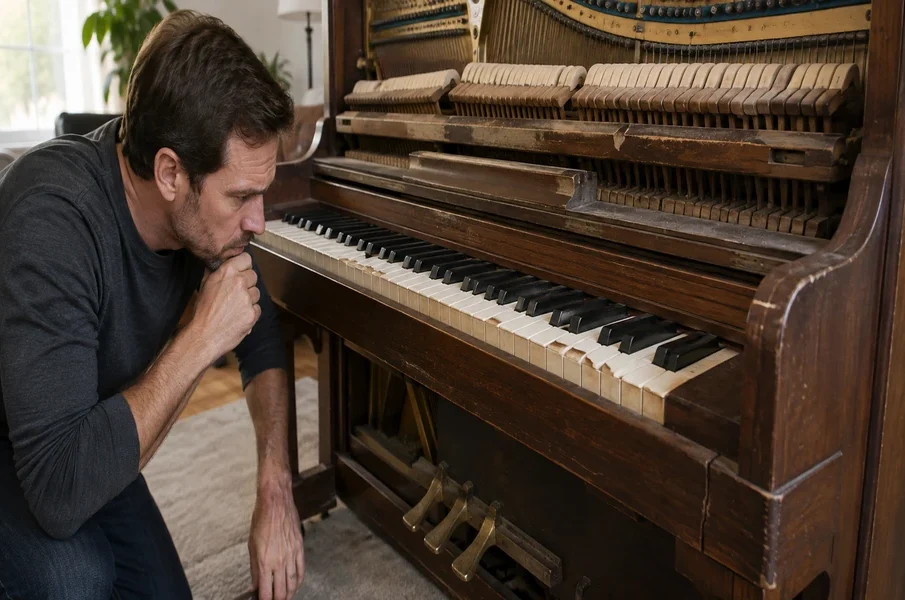
When a piano begins to sound wrong, tuning is often the first solution that comes to mind. Sometimes that is exactly what the instrument needs. But pitch is only one part of how a piano performs.
A piano is also a complex mechanical instrument. Keys, hammers, dampers, pedals, strings, felt, wood components, and other moving parts all contribute to its touch and tone. As these components wear or shift, an instrument may develop problems that ordinary tuning cannot correct.
Knowing the difference can help piano owners describe problems more accurately and seek the right type of service before a minor issue becomes more disruptive.
1. Certain Keys Feel Slow, Heavy, or Unresponsive
A properly functioning keyboard should provide reasonably consistent response from one key to the next. If several keys suddenly feel sluggish, unusually heavy, or reluctant to return after being played, pitch adjustment alone is unlikely to solve the problem.
The issue may involve the piano’s action-the mechanical system that transfers movement from the keys to the hammers and ultimately produces sound.
The Piano Technicians Guild distinguishes action regulation from tuning: tuning addresses pitch, while regulation concerns the mechanical adjustments that influence touch and responsiveness.
One slightly unusual key may represent a small adjustment or repair. A larger group of inconsistent keys can indicate that broader regulation or mechanical servicing deserves attention.
2. You Hear Clicking, Buzzing, Rattling, or Other Mechanical Noises
Not every unwanted sound means a piano is out of tune.
Clicks, rattles, squeaks, or buzzing noises can originate from mechanical parts, loose components, foreign objects, or other conditions that require inspection rather than pitch correction. The Piano Technicians Guild notes that aging and wear can contribute to noises as piano components deteriorate or move out of proper adjustment.
Pay attention to when the sound occurs. Does it happen with one key? A group of notes? Only when a pedal is used? Does it seem to come from the cabinet rather than the strings?
Those observations can give a technician useful clues and help narrow the inspection.
3. The Same Problems Keep Returning After Tuning
A tuning can improve pitch relationships, but it cannot correct every mechanical or structural problem affecting an instrument.
If a piano sounds better immediately after tuning but persistent problems with touch, noise, tone, or stability remain, another type of service may be needed. Regulation, voicing, targeted repair, or-in more extensively worn instruments-reconditioning or restoration may be more appropriate.
This is the point where diagnosis matters more than repeatedly requesting the same service. For owners experiencing recurring mechanical symptoms, a professional resource covering piano repair on Long Island can help clarify the range of repair, tuning, and restoration issues that may require hands-on assessment.
The objective should not be to assume the piano needs major work. It should be to identify the actual cause before deciding how much intervention makes sense.
4. The Piano Is in Tune but Still Sounds Uneven
Pitch and tone are related, but they are not identical.
You may notice that several notes sound noticeably brighter, harsher, softer, or duller than neighboring notes even after the piano has been tuned. In situations like these, the condition and adjustment of the hammers and action can influence what the player hears.
Voicing is one of the services used to address tonal characteristics. Steinway, for example, describes voicing as work involving the piano’s felt-covered hammers and their effect on tonal quality.
That distinction is useful because repeatedly tuning an instrument will not necessarily correct an uneven tonal character if pitch is not the underlying problem.
5. Pedals or Dampers Aren’t Behaving Normally
Pedal problems are another indication that piano maintenance extends beyond tuning.
A sustain pedal that feels unusually loose, a damper that fails to stop a note cleanly, or inconsistent pedal response can point toward mechanical adjustments. The keyboard action, damper system, and pedal mechanisms work together, and each can require attention over time.
Before assuming a major failure, note exactly what happens during normal playing. Is the problem constant? Does it affect every note or only part of the keyboard? Does a note continue ringing after the key is released?
Specific observations make professional diagnosis much easier than simply reporting that the piano “doesn’t sound right.”
6. An Older Piano Has Multiple Problems at Once
Age by itself does not determine whether a piano needs repair or restoration. Condition, construction, environment, amount of use, maintenance history, and the owner’s expectations all matter.
However, an older instrument with a combination of worn action parts, unstable tuning, damaged components, uneven tone, cosmetic deterioration, and recurring mechanical issues deserves a broader evaluation.
The Piano Technicians Guild notes that when routine maintenance can no longer provide satisfactory performance, reconditioning or rebuilding may become worth considering.
That still does not mean a complete restoration is automatically justified. In some cases, targeted mechanical work may provide the improvement the owner wants. In others, the instrument’s condition or personal significance may justify more extensive work.
A qualified evaluation helps separate necessary repairs from optional improvements.
Conclusion
Tuning remains an essential part of piano maintenance, but it is not a universal fix.
When keys behave inconsistently, mechanical noises appear, pedals malfunction, tonal problems remain after tuning, or several issues develop together, the instrument may be signaling a need for broader technical attention.
Piano owners do not need to diagnose every internal component themselves. What matters is recognizing the difference between a pitch problem and a larger performance problem, documenting the symptoms, and having the instrument evaluated before choosing the next step.
The better the diagnosis, the easier it becomes to make a sensible decision about tuning, repair, regulation, or restoration-and to preserve an instrument that remains enjoyable to play.


